
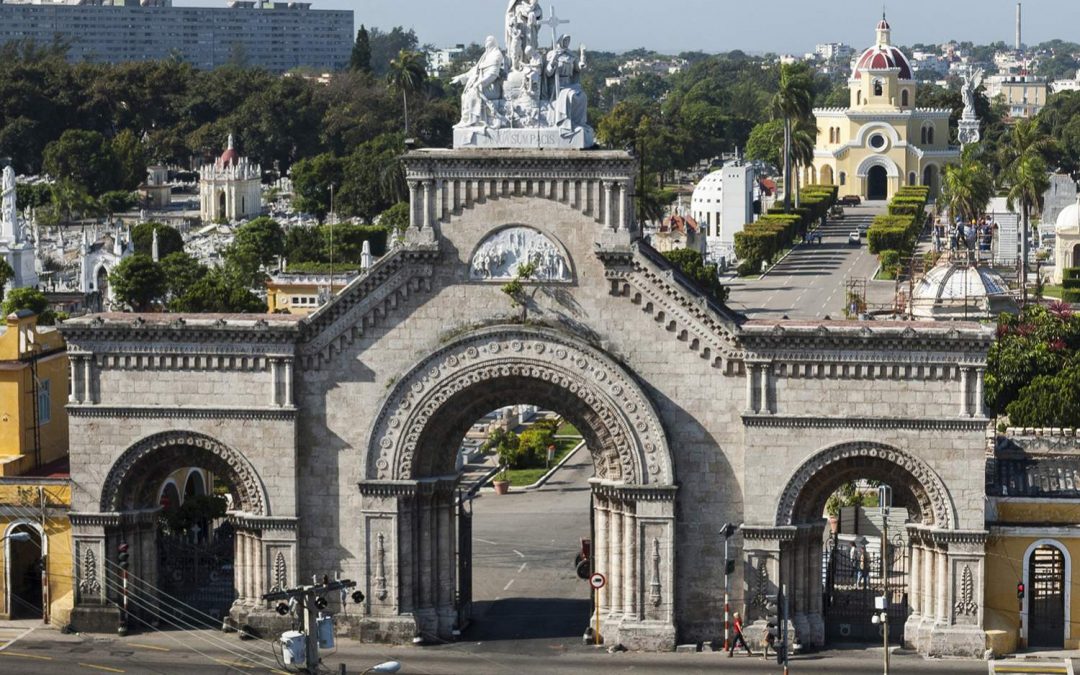
Located in the heart of Havana, the Gate of Peace, consisting of three colossal Romanesque-Byzantine arches, opens up to a 150-acre cemetery that is full of magnificent monuments, mausoleums, vaults, crypts, chapels, and solemn sculptures. Havana’s Colon Cemetery is considered the biggest in Latin America and the the third biggest, as well as one of most significant cemetery in historical and architectural terms, in the world; a true, majestic city of the dead.
The famous tourist attraction was created in Vedado neighbourhood in 1876, and replaced the Espada Cemetery, which had to be closed because it was not big enough to burry so many people that died because of epidemics at that time. Havana’s Colon Cemetery was named after the conqueror Christopher Columbus, and designed by the Galician architect Calixto Arellano de Loira y Cardoso, who died before the project was finished. Ironically, he was one of the first bodies buried in this new cemetery.
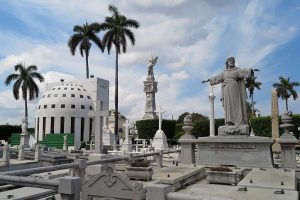
Havana’s Colon Cemetery is well known for its countless sculpted funerary memorials by 19th and 20th century artists. It is estimated that the cemetery contains over 500 major mausoleums, chapels, and family vaults; with different architectural styles, such as renaissance, neoclassical, and art deco. It is an open-air museum of marbles, bronzes, angels, and crosses; symbols of the great imagination of the artists allowing to appreciate the dead’s social class and the acknowledgment they deserved by others. In fact, the area of the cemetery is defined by rank and social status of the dead: priests, soldiers, brotherhoods, the wealthy, the poor, infants, victims of epidemics, pagans, and the condemned.
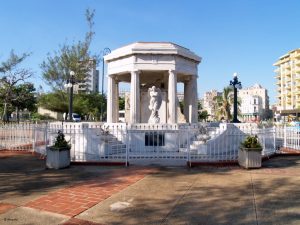
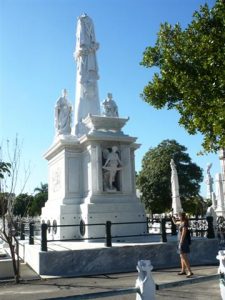
Among the most legendary funerary monuments, we can find the one raised in honor to the eight medicine students executed on November 27th, 1871, who were guilty of profaning the Spanish Don Gonzalo de Castañón’s tomb. Furthermore, Havana’s Colon Cemetery houses a 75-foot-tall memorial that commemorates the loss of the twenty eight firefighters and other neighbors victims in a catastrophic fire in 1890. In adittion, one of the the most visited tomb holds the remains of Amedlia Goyre de la Hoz, known as the The Miraculous One (La Milagrosa), the protector of pregnant women and children. Besides, we cannot forget the tomb built to Catalina Laza by her second husband Juan Pedro Baró, the famous Chapel of Love. These are only few of the numerous master pieces of the architecture that can be beheld in Colon Cemetery. There are many other special monuments dedicated to remarkable poets, filmmakers, sport players, musicians.
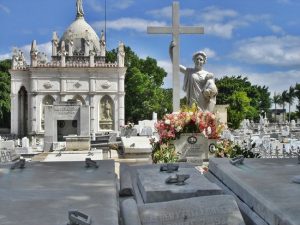
Nowadays, the still-operational cemetery holds over 800,000 graves and includes a million interments. After three years, remains are exhumed, removed from their tombs, boxed and placed in a storage building in order to make room for new interments.
Undoubtedly, there is a deeply interesting story behind every grave, which is mostly forgotten by the population. If you would like to travel back in time in order to appreciate beauty, art, peace and learn about the history of Cuba from colonial times to modern days, the Forgotten legends of Havana’s Cemetery is the experience you are looking for.