

Feeling the rhythm and dancing to the music makes us feel alive, complete, and rewarded. Music and dance are so deeply embedded in the human being that we cannot conceive our lives without them. They are medicine to the heart and the trigger of our positive emotions, wonderful feelings, and good vibes. Cuba is one the most musical countries in the world, an island where you can find plenty of opportunities to soak in the unique, intoxicating Caribbean rhythms. Moreover, this is the land of numerous outstanding musicians, gifted with great talent to make popular Cuban music, which is delivered almost everywhere you go.
Origins of Cuban dance
Dancing in Cuba goes back to before colonization. The native people of the Caribbean, the Taínos, performed rituals known as “areíto”, which involved dancing and singing, reflecting several aspects of Taíno religion and culture. Dancing continued to develop after colonization. With the arrival of West African slaves starting in the 17th century, new influences on the religious dances of Santería, yuka, and abakúa laid the foundation for forms of contemporary Cuban dance and music.
In addition, some essential periods in the Cuban history shaped a wide range of dance forms that we still find on the island. For example, the Haitian Revolution (1791-1804) proved to be a significant influencer in the history of Cuban dance. The emigration of Haitian slaves to Oriente (the eastern part of the island) introduced dances that reproduced their stories of rebellion. These dances developed into a Cuban dance called tumba francesa, an Afro-Cuban genre of dance. Moreover, during the 19th century, French contredanse was introduced by affluent Europeans. Slaves imitated this dance, and the combination created the Cuban contradanza, a more sensual version of the contredanse.
Popular Cuban dances
Danzón
It is the official musical genre and dance of Cuba. Born in the ballrooms of Havana and Matanzas, traditional Danzón is an elegant and delicate ballroom dance for couples. Modern versions are known as Danzonete. Danzón songs are all made up of two sections: a short paseo and longer melody. During the paseo, the couples don’t dance. Instead, they stroll around the dance floor, chat, flirt, and even drink; but on that first beat of the melody, they all get ready to dance.

Mambo
Mambo, a rapid and sensual dance, is a musical form and dance style that developed originally in Cuba, Havana, in the 1930s. It was created by the native Cuban musician and composer Arsenio Rodríguez. Mambo involves fast and complicated moves which can be difficult to learn; but once you learn it, this dance is sheer fun and excitement!

Cha Cha Chá
This is one of the most famous dances in the world. As a consequence, lots of tourists are eager to learn or experience this dance form when traveling to Cuba. Cha Cha Chá originated from Danzón in the 1950s, and its creation can be attributed to an excellent Cuban composer and music director, Enrique Jorrín. As a curious fact, the name is onomatopoeic, derived from the sound of the scraper (a guiro) and the shuffling of dancing feet. This style is notable for having a rhythm that many social dancers don’t get quite right at first. The count is meant to be “two, three, cha-cha-cha.”

Bolero
The Cuban Bolero or Trova originated in Santiago de Cuba, in the last quarter of the 19th century. The style began when a group of musicians earned their living by moving around the city and singing and playing the guitar to passers-by. Pepe Sánchez is considered the creator of the Cuban Bolero, a style particularly popular throughout Latin America.

Salsa
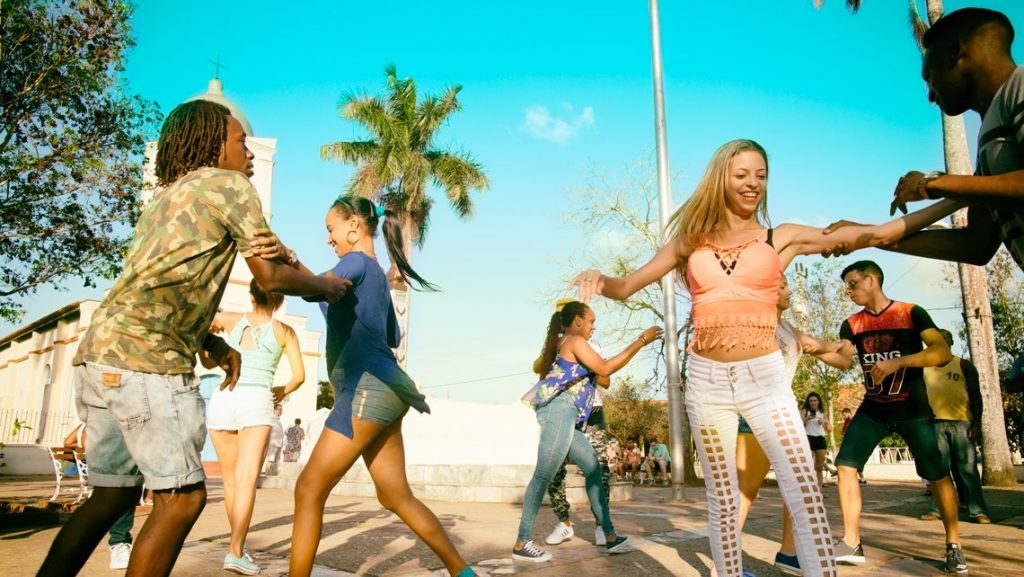
Cuban Salsa or Casino is a type of salsa that was developed in recreation centers of Havana in the 1950s, as a fun blend of Son, Cha Cha Chá, Mambo, and many other elements of dance. Cuban Salsa involves popular up-and-down shoulder movements, performed in couples in a large circle while rotating and creating a beautiful, synchronized dance choreography. There is a strong salsa culture in Cuba, so you can easily find salsa dance classes in the country, especially in Havana.
Rumba
On Sunday afternoons, in Havana and other regions of Cuba, it is common to see Cubans making drums out of stools and domino tables, and erupting into a spontaneous gathering of song and Rumba dance. The lively music and dance form emerged in the mid-19th century, when the drumming of enslaved Africans blended with the melodies of Spanish colonizers. Rumba continued to evolve after slavery was abolished in Cuba by 1886. Dancers developed different styles: the primarily male columbia, the sensual yambú, and the pelvis-thrusting guaguancó, Cuba’s most popular form. Rumba entails conga drums, claves (sticks), and maracas, which create a perfect expression of the island’s identity and culture. After all, rumba means “party.”

Ballet
The Caribbean island is one of the main stages of the world’s best ballet. Ballet in Cuba really developed after iconic ballerina Alicia Alonso set up the Ballet Nacional de Cuba in 1948, now one of the most prominent dance companies in the world. Cuba has ballet schools throughout the country with one of their most famous celebrities, Carlos Acosta. The National Ballet School in Havana is home to 3,000 students, making it one of the largest and well-recognized ballet schools worldwide.

There is a saying that Cubans were born dancing. Without a doubt, dance runs through Cubans’ veins; it is already a part of Cuban life. If you have the privilege of visiting this wonderful island, be prepared to dance and enjoy a variety of catchy rhythms, which will greatly boost your creativity, spontaneity, and adrenaline!