

Cuba has always been a bucket-list country for many travelers. A trip to Cuba is full of history, culture, and a captivating heritage. Live music can be felt through the cobbled squares in the old town; vintage cars still cruise the streets; and the beautiful old buildings in Cuba’s colonial cities evoke the feel of a country frozen in time.
But, traveling to Cuba can be a bit of a hassle; you need to know some things beforehand. Here are a few points you may find useful when planning your trip:
Visas and insurance
There’s some paperwork in place to enter Cuba, but it’s not at all complicated. You’ll need a visa which you can buy from your tour operator, or simply pay for it on arrival (under 20 dollars for tourists). Cuba also requires visitors to have health insurance for the length of their stay.

No internet, no remote work
Internet access is very limited in Cuba, including services at hotels, where connection rates can be as high as 2 dollars per hour. Additionally, a few American service providers block traffic from IP addresses in Cuba; and you will not be able to access them unless you use a VPN. You’ll be able to do simple things, like checking your email and a few social media sites, but there’s no way to be sure if other websites will work (especially if they require a lot of bandwidth). So don’t plan on doing anything that relies on an internet connection while in Cuba.
Moreover, during the last couple of years, a number of WiFi hotspots have been installed in the main parks and squares of the country. You can use WiFi, but you have to buy a 1cuc/1h card from ETECSA (Cuban Telecommunications Provider), which will provide you with a user number and password to access Internet.

Bring cash and don’t rely on your credit cards
There are two currencies in circulation in Cuba. One of them is the Cuban peso (CUP), mainly for locals. You won’t have to use it actually! The other one is the convertible peso (CUC) which is used to pay any tourist service as it replaces the American dollar in the country. There are numerous official money exchange offices (called CADECA) where you can change any hard currency into CUC. It is also possible to exchange money at some hotel receptions but the rates are a little less favourable.
But bear something in mind: international credit cards are accepted in Cuba as long as they have not been issued by an American bank or any of its subsidiaries (because of the US embargo on the Cuban economy). You can also get cash by using a cash dispenser / ATM but the banknotes / bills will be in CUC (not in your currency). Additionally, when you pay with a credit card in Cuba the amount is multiplied by 1.03 (10% tax of the Cuban bank as it is a high-risk operation because these transactions are made based on the American dollar).

Therefore, as only a few establishments will accept credit/debit cards in Cuba, it is advisable to bring cash for your trip. Customs regulations allow import of up to 5,000 dollars.
Bring a printed map or download Maps.Me
No internet also means no Google Maps to guide you. If you have a guide book or a printed map, bring it with you. You’re going to need it. Cubans are helpful, and you can always ask for directions, but it’s a good idea to have one or more maps as an aid to make your own plans. Another useful tool to get oriented in Cuba is the app Maps.Me. This is a map that works offline and helps to track locations. You just need to download the app and the database for Cuba.


Roaming services will bankrupt you
Planning in a way that you don’t have to use your cell phone in Cuba is also advisable. For starters, not all telecom companies offer roaming services for their customers in Cuba, and those who do will have to charge very high rates because they need an agreement with ETECSA. Thus, make sure to find out if your mobile company can offer roaming service in Cuba.
Get familiar with customs regulations
Cuba has very strict customs regulations, and there are a number of items to avoid bringing in your luggage if you don’t want to be stopped and searched by customs officers. But what can you bring back from Cuba?
Because Cuban rum, coffee and cigars are considered as a successful ménage à trois, every visitor wants to bring home some. For export, premium Cuban rolled cigars, that is, rolled cigars belonging to the range of brands marketed by Habanos SA, the Cuban Customs standardizes the following:
- The traveler may carry:
- Up to 20 units of rolled cigars, without the need to submit any documents
- Up to 50 units of rolled cigars, with the condition that they are in original, closed, sealed containers and with the official hologram established
- A quantity exceeding 50 units of rolled cigars, but having to present the official sales invoice issued by the stores that are authorized to market Cuban rolled cigars.
For Americans, there are other regulations due to the so-called embargo on Cuban economy. So far, they may bring home an unlimited amount of both cigar and rum if they are over 21. The first liter of alcohol and first 100 cigars are duty-free, provided that the total dollar value of items you are bringing back to the US is under $800. Nevertheless, alcohol and tobacco must be for personal use.

Don’t drink running water
Running water should not be drunk as drinkable water because it has been chemically treated to purify it. You are advised to drink only bottled water.
Power
Voltage in Cuba is 110 volts, but in many hotel rooms you can also find 220 volts. Therefore, pay attention to the label on the power point / outlet when you are going to plug an electronic device in. If you need an adaptor, you can contact the reception / front desk or the person in charge of public relations at your hotel. But if you are wanting to book a private house, then you need to bring an adaptor. In Cuba the power plugs and sockets are of type A, B, C and L. When living in Canada, you need a power plug adapter for sockets type C and L. We recommend you to pack a 3 to 2 prong adapter in case type B sockets are not available.
Transportation
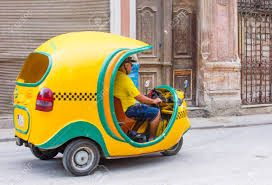
There are several means of transport for tourists in Cuba. The most extended ones are taxis and they have meters. There’s also the small “cocotaxi”, but they don’t have meters so the price can be negotiated with the driver for the specific ride. For those wanting to go to other Cuban cities, the best bus service is offered by the Viazul Company which has modern, air-conditioned buses and reasonable fares. You can find this Company at the Bus Station of Havana.


No doubts, Cuba can be confusing for first timers. But if you avoid costly pitfalls and prepare properly with our practical guide, your trip to Cuba will be undoubtedly exciting!!